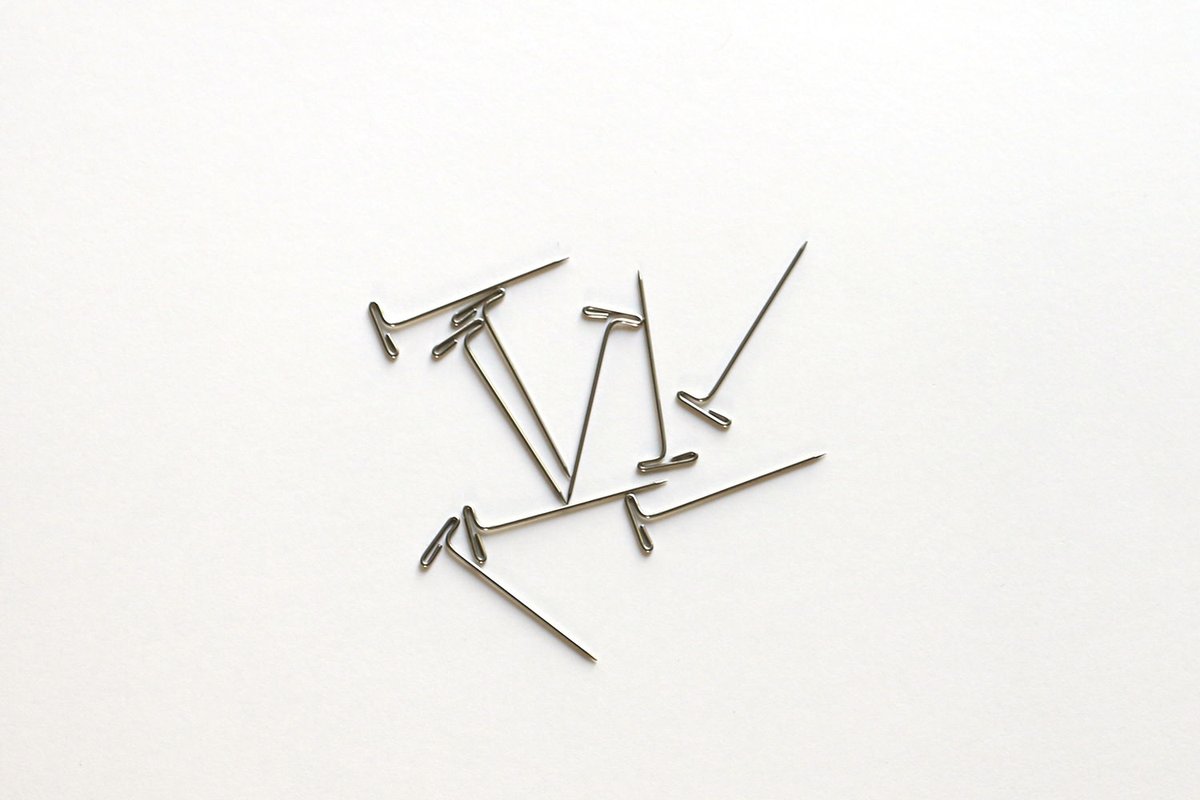
When you’re staring down a project—whether it's draping fabric, aligning components, or securing a delicate display—the seemingly simple T pin can be the unsung hero, or the silent sabotager. Knowing How to Choose the Right T Pins isn't just about picking any pointy metal stick; it’s about precision, stability, and ensuring your work holds up exactly as intended. Getting it wrong can lead to damaged materials, frustrating slippage, or even compromised safety.
This guide is your authoritative roadmap to selecting the perfect T pins for any task. We’ll cut through the jargon and empower you to make informed choices, turning a simple purchase into a confident investment in your project’s success.
At a Glance: Your T Pin Cheat Sheet
- Understand Your Material: T pins come in various metals, each suited for different environments (e.g., stainless steel for moisture, brass for non-marring).
- Match Diameter to Strength: Thicker pins offer more holding power but require larger holes.
- Consider Length for Depth: Ensure the pin is long enough to penetrate and secure your materials effectively.
- Application Dictates Type: Crafts, industrial alignment, or display each demand specific T pin characteristics.
- Quality Pays Off: Invest in durable, well-made pins to avoid bending, breaking, or rust.
- Don't Forget the Head: The 'T' head is designed for easy grip and removal, but variations exist.
Beyond the Basics: What Exactly Are T Pins?
Before we dive into selection, let's establish what makes a T pin unique. Unlike a standard straight pin or a common nail, a T pin features a distinctive, flat, crossbar-shaped head that resembles the letter 'T'. This design isn't just for aesthetics; it's a fundamental engineering choice that offers several key advantages:
- Enhanced Grip: The flat T-head provides a much larger surface area than a traditional round pinhead, making it significantly easier to grasp, insert, and remove, especially when working with thick materials or wearing gloves.
- Increased Stability: The broad head helps prevent the pin from slipping through loose weaves, soft materials, or pre-drilled holes, offering a more secure hold. This is particularly crucial in applications where precise positioning is paramount.
- Leverage for Removal: The T-shape allows for better leverage when pulling the pin out, reducing strain and preventing bending of the pin itself.
In essence, a T pin is engineered for better handling and superior holding power compared to its simpler pin counterparts. It's the go-to fastener when you need reliable temporary or semi-permanent securing without damaging your workpiece.
Why Your T Pin Choice Matters (More Than You Think)
You might think a pin is just a pin, but the subtle differences in T pin specifications can dramatically impact your project's outcome. Using the wrong T pin isn't just inconvenient; it can be costly and frustrating. Imagine:
- A craft project ruined: A pin that's too thick tears delicate fabric, or one that's too thin bends under pressure, letting your pattern shift.
- An industrial fixture compromised: An incorrectly sized T pin allows components to misalign, leading to manufacturing defects or even equipment damage.
- A display board falling apart: Weak pins fail to hold heavy items, resulting in a presentation disaster.
Understanding the nuances of T pin selection isn't about being overly fastidious; it's about anticipating potential problems and proactively choosing tools that guarantee efficiency, accuracy, and durability. This foresight saves time, material, and often, a good deal of headache.
The Anatomy of a T Pin: Key Features to Consider
To make the right choice, you need to understand the fundamental characteristics that define a T pin. Think of these as the building blocks of its functionality.
1. Material: The Core of Durability and Application
The metal a T pin is made from dictates its strength, resistance to corrosion, and suitability for specific environments. This is often the most critical factor.
- Stainless Steel (e.g., 302, 304, 316):
- Pros: Excellent corrosion resistance, strong, durable, food-grade options available. Resists rust even in damp or humid conditions.
- Cons: Can be more expensive than carbon steel.
- Best For: Outdoor use, marine environments, sewing (especially with fabrics that might be washed), medical/laboratory settings, food processing, any application where rust is unacceptable.
- Nickel-Plated Carbon Steel:
- Pros: Strong, economical, nickel plating offers some rust resistance and a smooth finish.
- Cons: Not as corrosion-resistant as stainless steel; plating can wear off over time, exposing the steel to rust.
- Best For: General office use, temporary holding, crafts where environmental exposure is minimal, display boards.
- Brass:
- Pros: Non-corrosive, non-magnetic, good electrical conductivity, non-sparking, relatively soft (less likely to scratch or mar delicate surfaces).
- Cons: Not as strong as steel, more expensive.
- Best For: Applications requiring non-marring properties (e.g., fine woodworking, delicate fabrics), electrical work, environments where magnetism is an issue, or spark resistance is critical.
- Specialty Alloys: For extreme environments (high heat, specific chemicals), specialized alloys exist, but these are typically for highly industrial or scientific applications.
Expert Insight: McMaster-Carr, a leading industrial supplier, offers a vast array of T pins in various stainless steel grades specifically for environments ranging from general purpose to highly corrosive, underscoring the importance of material selection for longevity and performance.
2. Diameter (Gauge): The Balance of Hold and Impact
The diameter, or thickness, of a T pin determines its holding power and the size of the hole it will create. It's a trade-off: thicker pins hold better but make a more noticeable impression.
- Thin Gauge (e.g., 0.025" - 0.035"):
- Pros: Minimizes fabric damage, less visible, suitable for delicate materials.
- Cons: Weaker, more prone to bending, less holding power.
- Best For: Delicate fabrics (silk, lace), fine art display, temporary paper holding.
- Medium Gauge (e.g., 0.040" - 0.050"):
- Pros: Good balance of strength and minimal impact, versatile for many common tasks.
- Cons: May still bend with very tough materials.
- Best For: Standard sewing, upholstery, general display, lightweight industrial applications.
- Heavy Gauge (e.g., 0.060" - 0.080"+):
- Pros: Superior holding power, very strong, ideal for dense materials.
- Cons: Creates larger holes, more noticeable, can be harder to insert into some materials.
- Best For: Thick upholstery, industrial fixturing, heavy-duty displays, dense insulation.
Pro Tip: Always test a pin's diameter on a scrap piece of your material first to ensure it provides adequate hold without causing damage.
3. Length: Reaching the Depths of Your Project
T pin length is measured from the tip to the underside of the 'T' head. It dictates how deep the pin can penetrate and how securely it anchors.
- Short (e.g., 0.5" - 1"):
- Pros: Discreet, minimal protrusion, good for thin materials or shallow holds.
- Cons: Less holding power in thick materials, can be harder to grip.
- Best For: Pinning delicate papers, small fabric pieces, light displays.
- Medium (e.g., 1.5" - 2"):
- Pros: Most versatile length, suitable for a wide range of applications, good grip.
- Cons: May be too long for very thin materials or too short for very thick ones.
- Best For: Standard sewing, upholstery, most display boards, light to medium industrial work.
- Long (e.g., 2.5" - 3"+):
- Pros: Maximum holding power, ideal for very thick materials, deep penetration.
- Cons: More visible, can be cumbersome, may over-penetrate and damage underlying surfaces.
- Best For: Multi-layered fabrics, thick foam, insulation, heavy-duty industrial fixturing, securing items into deep backings.
When considering length, think about the total thickness of the material(s) you need to secure and ensure the pin can pass through and have enough remaining length to provide a stable anchor.
4. Point Type: The Entry Point
While most T pins feature a sharp, tapered point, subtle variations exist that can affect ease of insertion and material integrity.
- Standard Tapered Point: The most common, designed for general penetration into a wide range of materials.
- Blunt/Rounded Point: Less common, but sometimes found in specialty pins designed for very loose weaves or for applications where piercing is to be avoided (e.g., pushing into pre-existing holes in a jig).
- Chisel Point: Occasionally seen in heavy-duty applications for cutting through tougher materials with less effort, though rare for general T pins.
For most uses, a standard, well-sharpened tapered point is ideal, allowing for smooth insertion without excessive force.
Application-Specific Guides: Matching T Pins to Your Project
Now that we understand the anatomy of a T pin, let's explore how to apply this knowledge to specific use cases.
Crafts & Sewing: Precision for Your Creations
In the world of textiles and crafting, T pins are indispensable. Your choice here directly impacts fabric integrity and project precision.
- Project Type: Quilting, garment making, upholstery, blocking knitted items, macrame.
- Ideal T Pin Characteristics:
- Material: Nickel-plated carbon steel for general sewing (economical, smooth), or stainless steel for projects that will be washed, blocked wet, or exposed to humidity (prevents rust stains).
- Diameter: Medium to fine gauge (0.035" - 0.045") for most fabrics to minimize holes. Heavy gauge (0.050"+) for thick upholstery or canvas.
- Length: 1.5" to 2" is highly versatile. Longer pins (2.5"-3") are excellent for pinning through multiple layers of fabric, foam, or for blocking larger knitted pieces securely into a board.
- Point: Sharp, tapered for easy penetration.
- Example: For quilting delicate cotton, a 1.5" medium-gauge stainless steel T pin is perfect. For heavy velvet upholstery, opt for a 2" heavy-gauge nickel-plated pin.
Display & Presentation: Holding Your Vision in Place
Whether you're mounting artwork, organizing memos, or creating professional displays, T pins offer a reliable, temporary hold.
- Project Type: Bulletin boards, cork boards, foam core displays, art exhibits, signage.
- Ideal T Pin Characteristics:
- Material: Nickel-plated carbon steel is usually sufficient for indoor displays. Stainless steel if exposed to outdoor elements or high humidity.
- Diameter: Medium to heavy gauge (0.040" - 0.060") to provide good grip in board materials.
- Length: 1" to 2" is common. Shorter pins for thin papers, longer pins for thicker posters or multiple layers on a foam board.
- Point: Sharp, tapered for easy insertion into cork, foam, or wood.
- Consideration: For very public displays, consider T pins with a slightly larger, flatter head for easier removal without damaging the display material.
Industrial & Mechanical: Precision Fixturing and Alignment
Here, T pins often serve critical functions in assembly, machining, and quality control. This is where material strength and precise dimensions become paramount.
- Project Type: Holding components during welding, jig and fixture setup, temporary alignment of parts, marking positions, template securement.
- Ideal T Pin Characteristics:
- Material: High-grade stainless steel (e.g., 304, 316) for strength, corrosion resistance, and precision. Hardened carbon steel if maximum strength is needed in a dry environment.
- Diameter: Often heavier gauge (0.050" - 0.080"+) for robust holding power and rigidity. Precision-ground diameters are crucial for snug fits in jig plates.
- Length: Varies widely based on part thickness and fixture design, from 1" to several inches.
- Point: Typically sharp, but sometimes a blunt or chamfered end is used if the pin is intended for a pre-drilled hole that shouldn't be expanded.
- Expert Insight: Carr Lane Manufacturing, renowned for industrial tooling components, emphasizes the precision and strength of their T pins for alignment and fixturing. Their products often feature specific material treatments for hardness and resistance to wear, highlighting that industrial applications demand pins built to exacting standards. If you're building a jig where components need to be repeatedly placed and removed without deviation, the quality and precise dimensions of your T pins are non-negotiable.
DIY & Home Improvement: Temporary Holds for Practical Tasks
From holding down tarps to marking drill points, T pins have a place in the home workshop and during renovations.
- Project Type: Securing insulation, temporarily holding plastic sheeting, marking measurements on soft materials, garden netting.
- Ideal T Pin Characteristics:
- Material: Nickel-plated carbon steel for general indoor use. Stainless steel for outdoor or damp applications.
- Diameter: Medium to heavy gauge (0.045" - 0.070") for strength against various materials.
- Length: 2" to 3" is often useful for reaching through thicker insulation or securing into softer ground.
- Point: Sharp, robust for penetrating tougher materials.
Scientific & Laboratory Use: Specialized Needs
Labs often require pins for dissection, sample holding, or experimental setups, where specific material properties are critical.
- Project Type: Dissecting specimens, holding samples on cork boards, marking areas in microscopy.
- Ideal T Pin Characteristics:
- Material: Medical-grade stainless steel (e.g., 316) for sterility, corrosion resistance, and chemical inertness. Brass for non-magnetic or non-sparking needs.
- Diameter: Varies by specimen size, often fine to medium gauge (0.025" - 0.040") to minimize damage.
- Length: 1" to 2" commonly, or longer for larger specimens.
- Point: Very sharp, precision-ground for delicate work.
Sizing It Up: A Quick-Reference Chart for Common T Pin Uses
| Application | Recommended Material | Recommended Diameter (Gauge) | Recommended Length | Key Consideration |
|---|---|---|---|---|
| Delicate Fabrics/Quilting | Stainless Steel (prevents rust) | Fine (0.030" - 0.035") | 1" - 1.5" | Minimal fabric damage, rust prevention. |
| General Sewing/Upholstery | Nickel-Plated Carbon Steel / Stainless Steel | Medium (0.040" - 0.045") | 1.5" - 2" | Balanced strength & fabric impact. |
| Heavy Upholstery/Foam | Nickel-Plated Carbon Steel | Heavy (0.050" - 0.060") | 2" - 3" | Strong hold, deep penetration. |
| Display Boards (Cork/Foam) | Nickel-Plated Carbon Steel | Medium (0.040" - 0.050") | 1" - 2" | Secure hold in soft boards, easy grip. |
| Industrial Fixturing | Stainless Steel (304/316) | Heavy (0.050" - 0.080"+) | Varies (1" - 4") | Precision, strength, corrosion resistance. |
| Outdoor/Damp Environments | Stainless Steel (304/316) | Medium to Heavy | Varies | Superior rust resistance. |
| Lab/Medical | Stainless Steel (316) / Brass | Fine to Medium | 1" - 2" | Sterility, chemical resistance, non-magnetic. |
| (Remember, this chart offers general recommendations; always consider the specifics of your project.) |
Pitfalls to Avoid When Selecting T Pins
Even with all this knowledge, it's easy to make common mistakes. Steer clear of these pitfalls to ensure your T pin choice is a success:
- Underestimating Material Importance: Don't default to the cheapest option if your project involves moisture, chemicals, or specific material sensitivities. Rust stains on fabric or compromised industrial processes are far more expensive than investing in the right material upfront.
- Ignoring Diameter for Hole Fit: Using a T pin that's too thick can permanently damage delicate materials, leaving noticeable holes. Conversely, a pin that's too thin for a pre-drilled jig hole will allow for unwanted play and inaccuracy. Always match the pin's diameter to the material's tolerance.
- Overlooking Length Requirements: A pin that's too short won't provide adequate anchorage, leading to slippage. One that's too long might protrude unnecessarily, become a safety hazard, or even damage the surface beneath your workpiece.
- Buying Cheap, Low-Quality Pins: While T pins seem simple, poorly manufactured pins can bend easily, have dull points, or rust prematurely. Investing in a reputable brand, especially for critical applications, saves frustration and ensures reliability. Look for consistent quality, sharp points, and uniform dimensions.
- Forgetting About Removal: The "T" head is designed for easy grip, but if your application requires frequent removal or very deep insertion, consider pins with a slightly larger or even looped head for added leverage.
Maintenance and Storage: Maximizing Your T Pins' Lifespan
Once you've chosen the right T pins, a little care goes a long way in ensuring they last.
- Keep Them Dry: Regardless of material, moisture is the enemy of metal. Store pins in a dry environment. If they get wet (e.g., from wet blocking), dry them thoroughly before storing.
- Organize Them: A small magnetic dish, a pin cushion, or a compartmentalized box keeps your T pins organized and prevents them from getting lost or bending in a messy drawer.
- Inspect Regularly: Before use, quickly check pins for bends, rust, or dull points. A damaged pin can ruin your material or fail to hold properly. Discard or safely dispose of compromised pins.
- Lubrication (Industrial): For industrial applications where pins are frequently inserted into tight-fitting holes, a light dry lubricant can prevent galling and ease insertion/removal.
The Unsung Heroes: Specialized T Pins & Accessories
While standard T pins cover most needs, some niche applications benefit from specialized variants:
- Colored Head T Pins: These often have plastic or coated metal T-heads in various colors, useful for color-coding different sections of a project, categorizing, or making pins more visible against diverse backgrounds.
- Extra-Long T Pins: For unusually thick materials or very deep anchoring requirements, pins extending 4 inches or more are available.
- T Pin Pullers: For heavy-duty industrial settings where T pins might be under significant tension or very tightly seated, specialized tools can assist with safe and easy removal.
Where to Buy Reliable T Pins
The quality of T pins can vary significantly, so sourcing from reputable suppliers is crucial, especially for industrial or professional use.
- Craft & Hobby Stores: Excellent for nickel-plated and stainless steel options for sewing, quilting, and display. Brands geared towards crafters often prioritize smooth finishes and appropriate sizing for textiles.
- Online Retailers (Amazon, Etsy): Offer a vast selection, but be sure to read reviews and check seller reputation. Look for clear material and dimension specifications.
- Industrial Suppliers (McMaster-Carr, Carr Lane, Grainger): For high-strength, precision-ground, or application-specific T pins, these suppliers are the gold standard. They cater to professional and industrial users, offering detailed material specifications, certifications, and robust construction. While often more expensive, their pins meet stringent quality controls essential for critical applications.
- Hardware Stores: May carry basic T pins, usually nickel-plated carbon steel, suitable for general utility tasks.
Frequently Asked Questions About T Pins
Can T pins be reused?
Absolutely! High-quality T pins are designed for repeated use. Stainless steel pins, in particular, are very durable and resistant to corrosion, making them excellent for long-term reuse. Just inspect them for bending, rust, or dullness before each use to ensure they perform optimally.
What's the difference between a T pin and a straight pin?
The primary difference is the head. A straight pin typically has a small, round head, while a T pin has a distinctive, flat, crossbar-shaped head. This T-head provides a better grip for insertion and removal, more stability against slipping through materials, and greater leverage.
How do I remove a stubborn T pin?
If a T pin is stuck, don't just pull harder, as it might bend or break. Try twisting it slightly while pulling to break any suction or friction. If it's still resistant, use a pair of pliers or a dedicated pin puller (if available) to grip the T-head firmly and apply even, upward pressure.
Are T pins safe for all fabrics?
While T pins are versatile, exercise caution with very delicate or fine-weave fabrics (like silk, chiffon, or certain types of lace). Even fine-gauge T pins can leave visible holes or snags. Always test on an inconspicuous area or a scrap piece first. For these fabrics, consider using very fine silk pins or fabric clips instead.
Can T pins be used in a sewing machine?
No, T pins (or any pins) should never be used in a sewing machine while actively stitching. The machine needle can hit the pin, causing the needle to break, flying pieces of metal, and potentially damaging your machine or causing injury. Pins are for temporarily holding fabric before and during placement under the presser foot, but must be removed just before the needle reaches them.
Making Your Final Decision with Confidence
Choosing the right T pins is less about memorizing specs and more about understanding your project’s specific demands. By considering the material's environment, the thickness of your components, and the desired holding power, you can confidently select the T pins that will perform flawlessly.
Remember to prioritize quality, as a well-chosen T pin is a small but mighty investment in the success and longevity of your work. Equip yourself with the right tools, and you’ll find that even the simplest details contribute to a polished, professional outcome. For a deeper dive into the world of these versatile fasteners and to explore the full range of options available, check out Your complete T pins resource. You'll be pinning with precision in no time!